2000 Benditt Awardee Named
Judah Folkman
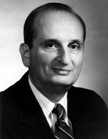
For his research in angiogenesis and cancer
On May 21, 2000, at the First Conference on Arteriosclerosis, Thrombosis and Vascular Biology in Denver/Broomfield, CO, Judah Folkman was awarded NAVBO’s Earl P. Benditt Award for his outstanding career contributions to the field of Vascular Biology. Judah’s accomplishments are varied and impressive. He transcended the usual career ladder recitation practically before his vita even started. As an undergraduate at Ohio State University, he co-authored papers on new surgical procedures for treating liver cancer. During medical school at Harvard, he worked with Robert Gross to develop the first implantable cardiac atrial pacemaker. While taking time off for military service from his surgical residency at Massachusetts General Hospital, he worked with David Long at the Bethesda Naval Hospital. Together, they developed the use of implantable polymers for the sustained-release delivery of drugs. After his residency was completed in 1965, Judah joined Harvard’s Surgical Service at Boston City Hospital as an Instructor in Surgery. In 1967 (two years later!) he was promoted to Professor of Surgery and became Surgeon-in-Chief at the Children’s Hospital, a post he held for 14 years before stepping down to devote his full time to research.
|
Throughout his long and productive career, Judah has received innumerable honors and awards. He has served on study sections and performed advisory services, and is a member of the National Academy of Sciences, the American Academy of Arts and Sciences, the American Philosophical Society, and the Institute of Medicine. Despite the heavy demands on his time from both the lay and scientific communities, he has remained a courtly and supportive colleague in vascular biology. I cannot recall hearing Judah present an invited, honorific talk without his making a point of highlighting a recent contribution by someone in the local community. Moreover, he manages to find the time in his busy schedule to offer advice or say something positive to those of us who are travelling in his wake. His award is the token of a respectful and appreciative community, and richly deserved.
William Schnaper
More about Judah Folkman - articles available on the web:
www.med.harvard.edu/publications/Focus/Nov_4/Cancer.html
cancernet.nci.nih.govwww.slip.net/~mcdavis/dbas9697/96312529.htm
zygote.swarthmore.edu/mesend3b.html